
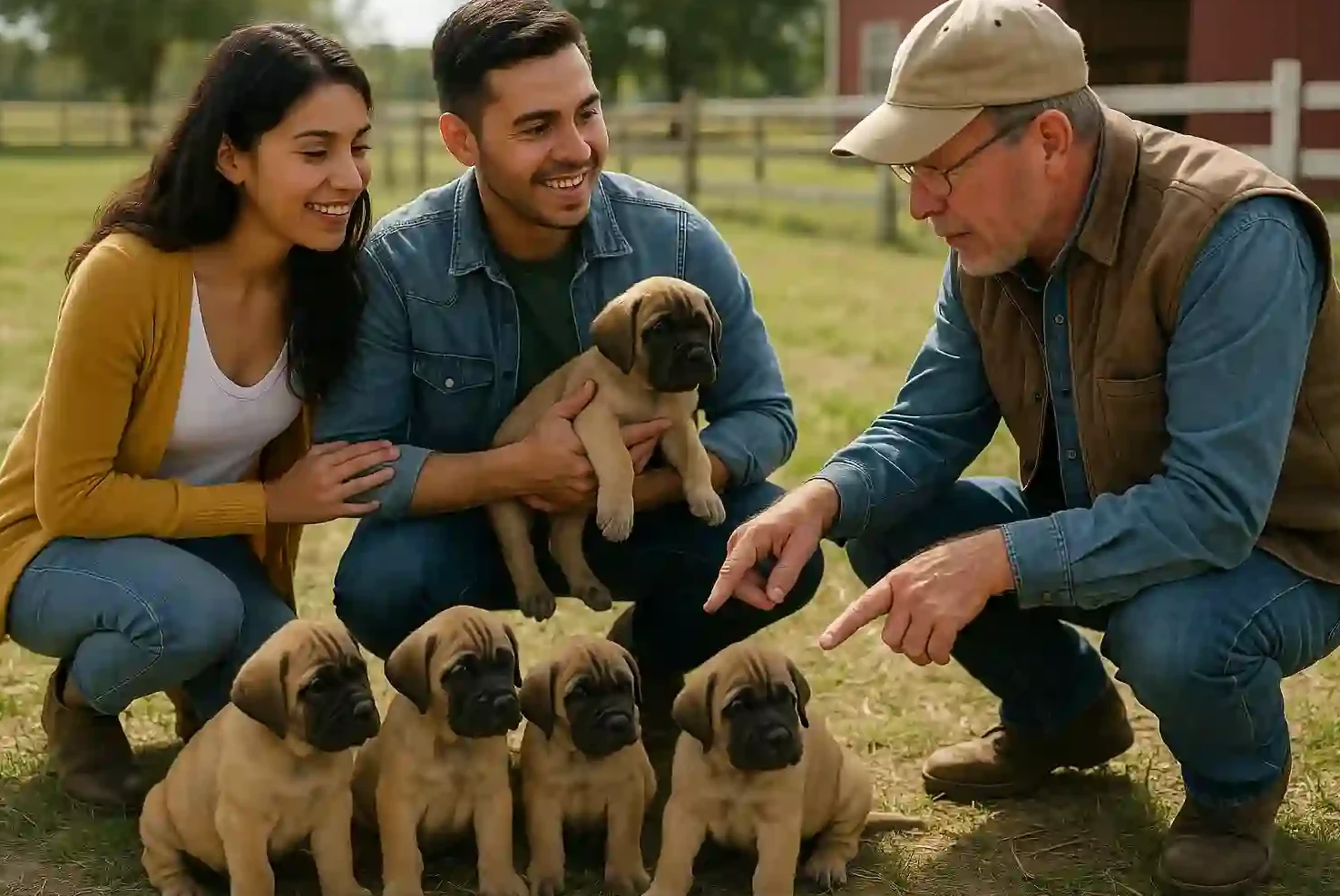
 In my experience, I can confidently say you’ve made a smart choice on deciding to welcome a gentle giant into your home! Mastiffs are truly magnificent dogs, known for their loyalty, affectionate nature, and impressive size.
But finding the right Mastiff isn’t as simple as picking the cutest puppy from a litter. It starts with finding the right breeder. If you’re thinking, “Okay, great, but how to find the best Mastiff breeders near me?” you’ve come to the right place.
This comprehensive guide will walk you through everything you need to know to identify a responsible, ethical breeder and avoid the pitfalls of puppy mills and backyard breeders. We’ll cover what to look for, the questions to ask, and, crucially, the red flags that should send you running in the opposite direction.
Why a Responsible Mastiff Breeder Matters
Before we dive into the “how,” let’s understand the “why.” Why is choosing a responsible Mastiff breeder so crucial?
- Health: Reputable breeders prioritize the health of their dogs. They conduct thorough health testing to screen for genetic conditions common in Mastiffs, such as hip and elbow dysplasia, heart problems (cardiomyopathy), eye disorders (PRA, entropion, ectropion), and bloat (gastric torsion). They won’t breed dogs with these issues, reducing the likelihood of passing them on to the puppies.
- Temperament: A well-bred Mastiff should have a stable, confident, and friendly temperament. Responsible breeders socialize their puppies from a young age, exposing them to various sights, sounds, and people. This early socialization is crucial for developing a well-adjusted adult dog.
- Breed Standard: Ethical breeders strive to produce dogs that conform to the American Kennel Club (AKC) breed standard for Mastiffs. This doesn’t mean they’re obsessed with winning dog shows, but it does mean they understand and appreciate the breed’s characteristics and are committed to preserving them.
- Support: A good breeder will be a resource for you throughout your Mastiff’s life. They’ll be available to answer your questions, offer advice, and provide support if you encounter any challenges.
- Ethical Considerations: By supporting responsible breeders, you’re helping to combat puppy mills and backyard breeders who prioritize profit over the well-being of their dogs.
Where to Begin Your Search: How to Find the Best Mastiff Breeders Near Me
Okay, let’s get practical. How to find the best Mastiff breeders near me? Here are several avenues to explore:
- The Many Mastiff Clubs: Clubs like the American Kennel Club (AKC) and The Mastiff Club of American (MCOA) are no doubt a much better option than relying on pet stores or online marketplaces. But keep in mind, the only breeders listed are the few who have paid the required fees. Plus, their lists are generally very out-of-date.
- Dog Shows and Breed Events: Attending dog shows and breed-specific events is a fantastic way to meet breeders in person and see their dogs. You can observe the dogs’ temperaments, talk to the breeders about their breeding practices, and get a feel for their knowledge and experience.
- Veterinarians and Breed Enthusiasts: Ask your veterinarian or other Mastiff owners for recommendations. They may know of reputable breeders in your area.
- Online Forums and Social Media Groups: While online forums and social media groups can be helpful, be cautious about recommendations you receive. Do your own research and verify the breeder’s credentials.
- I’m A Mastiff Fan: Here at I’m A Mastiff Fan, we offer a state-by-state list of Mastiff breeders. Since there are NO FEES with our lists for breeders or buyers, our lists are comprehensive. In addition, our lists are REGULARLY UPDATED for accuracy, so check us out.
But however you find your breeder, it’s important to ONLY work with breeders who are FULLY TRANSPARENT. Honest breeders will openly and gladly give you THEIR contact info (not that of a THIRD PARTY) and location.
What to Look for in a Mastiff Breeder: The Checklist
Once you’ve identified a few potential breeders, it’s time to do your homework. If you like what you have discovered about a breeder, it may lead to a visit. Here’s a checklist of things to look for in your research and your visit:
- Health Testing: This is essential. A responsible breeder will conduct the following health tests on their breeding dogs:
-
- Hip Dysplasia: Evaluated by the Orthopedic Foundation for Animals (OFA) or PennHIP.
- Elbow Dysplasia: Evaluated by OFA.
- Cardiac Evaluation: Performed by a board-certified veterinary cardiologist.
- Eye Examination: Performed by a board-certified veterinary ophthalmologist (CERF/OFA Eye Certification).
- Cystinuria DNA Test: This test identifies dogs that are carriers of cystinuria, a genetic kidney disorder.
- Knowledge and Experience: The breeder should be knowledgeable about the Mastiff breed, its history, characteristics, and potential health problems. They should be able to answer your questions thoroughly and honestly.
- Breeder Observations: How does the breeder interact with the dogs? Are they affectionate and caring? Is the breeder organized and knowledgeable? Is the breeder open and honest and transparent?
- Puppy Knowledge: In addition to knowing about Mastiff’s in general, a good, caring breeder will know about EACH of their puppies. They should be prepared to barrage you with helpful information they have observed in their puppies. This will lay an important foundation for your relationship with your new-found friend.
- Puppy Conditions: Are the kennels or living areas clean and well-maintained? Do the dogs have enough space to move around comfortably? Are the dogs provided with toys, chews, and other forms of enrichment?
- Puppy Observations: Are the dogs friendly and outgoing? Are the puppies being socialized with people and other animals? Do the dogs appear healthy and well-groomed?
- Transparency: A good breeder will be open and honest about their breeding practices, the health of their dogs, and any potential risks associated with the breed. They should be willing to share health testing results and pedigrees.
- Commitment to Socialization: Puppies should be raised in a home environment and exposed to various sights, sounds, and people from a young age. The breeder should handle the puppies frequently and provide them with opportunities to interact with other dogs and animals.
- Matching Puppies to Homes: A responsible breeder will take the time to get to know you and your lifestyle to ensure that you’re a good fit for one of their puppies. They’ll ask you questions about your experience with dogs, your living situation, and your expectations for a Mastiff.
- Contract and Guarantees: The breeder should provide a written contract that outlines the terms of the sale, including health guarantees, return policies, and spay/neuter requirements.
- Willingness to Take the Dog Back: A responsible breeder will always be willing to take a dog back if you’re unable to care for it, regardless of the dog’s age or reason for return.
Questions to Ask a Mastiff Breeder: Digging Deeper
Don’t be shy! Asking questions is a crucial part of the process. Here are some important questions to ask a potential Mastiff breeder:
- “How long have you been breeding Mastiffs?” Experience matters.
- “What are your goals for your breeding program?” Are they focused on health, temperament, and breed standard?
- “Can I see the health testing results for the parents of the puppies?” Don’t accept excuses.
- “What is the temperament of the parents like?” You want to ensure the parents have stable, friendly temperaments.
- “How do you socialize your puppies?” Early socialization is crucial.
- “What kind of food do you feed your dogs?” This can give you insight into their overall care.
- “What kind of veterinary care do the puppies receive?” They should be vaccinated and dewormed.
- “Do you offer a health guarantee?” What does it cover?
- “What happens if I can no longer care for the dog?” A responsible breeder will always take the dog back.
- “Can I visit your facilities and meet the dogs?” This is essential.
- “Do you have references from previous puppy buyers?” Follow up with those references.
- “What are the common health problems in Mastiffs, and how do you screen for them?” This tests their knowledge and transparency.
- “What is your opinion on early spay/neuter?” Their answer can reveal their understanding of canine health.
- “How do you match puppies to their new homes?” They should be thoughtful and consider your lifestyle.
- “What kind of support do you offer to new puppy owners?” A good breeder will be a resource for you.
Major Red Flags: When to Walk Away
Now, let’s talk about the warning signs. These red flags should make you think twice (or run away!) from a Mastiff breeder:
- No Health Testing: This is the biggest red flag. If a breeder doesn’t conduct health testing, they’re not prioritizing the health of their dogs.
- Unwillingness to Show You the Facilities: A responsible breeder will be proud to show you where their dogs live. If they refuse, it’s a sign that they have something to hide.
- Dirty or Overcrowded Conditions: The dogs should be living in clean, spacious, and comfortable conditions.
- Unhealthy or Fearful Dogs: The dogs should be healthy, well-groomed, and friendly. If they appear sick, malnourished, or fearful, it’s a major red flag.
- Selling Puppies Online Without Meeting You: A good breeder will want to meet you in person to ensure that you’re a good fit for one of their puppies.
- Pressure to Buy a Puppy: A responsible breeder will never pressure you to buy a puppy. They want you to be sure that you’re making the right decision.
- Lack of Knowledge About the Breed: The breeder should be knowledgeable about Mastiffs and able to answer your questions thoroughly.
- Refusal to Provide References: A responsible breeder will be happy to provide references from previous puppy buyers.
- Unclear or No Written Contract: The contract should be clear, comprehensive, and protect both the buyer and the seller. Make sure your transaction is IN WRITING.
- Breeding Dogs Too Young or Too Old: Breeding dogs that are too young (prior to 8 weeks of age) or too old can lead to health problems in the puppies.
- Breeding Bitches Every Heat Cycle: This is unethical and can be detrimental to the bitch’s health.
- Guaranteed “Perfect” Temperament or Health: No breeder can guarantee perfection. Be wary of breeders who make unrealistic promises.
- Breeding for “Rare” Colors or Traits: This is often a sign that the breeder is prioritizing profit over the health and well-being of the dogs.
- Price Significantly Lower Than Average: A significantly lower price may indicate that the breeder is cutting corners on health testing or care.
- Breeder is Unwilling to Take the Dog Back: This is a major red flag. A responsible breeder will always be willing to take a dog back if you’re unable to care for it.
The Importance of a Contract
A written contract is essential when purchasing a Mastiff puppy. The contract should outline the terms of the sale, including:
- Purchase Price: The total cost of the puppy.
- Health Guarantee: What health problems are covered, and for how long?
- Return Policy: What happens if the puppy develops a serious health problem?
- Spay/Neuter Requirements: When and how should the puppy be spayed or neutered?
- Registration Information: AKC registration details.
- Breeder’s Responsibilities: What support will the breeder provide?
- Buyer’s Responsibilities: What are your responsibilities as the owner of the puppy?
- Right of First Refusal: Does the breeder have the right to take the dog back if you can no longer care for it?
Read the contract carefully before you sign it. If you have any questions or concerns, don’t hesitate to ask the breeder for clarification. If you’re not comfortable with any of the terms, consider walking away.
Beyond the Breeder: Preparing for Your Mastiff Puppy
Finding the right breeder is just the first step. Once you’ve chosen your puppy, it’s time to prepare for their arrival. Mastiffs require a significant commitment of time, energy, and resources.
Here are some things to consider:
- Training: Mastiffs are intelligent but can be stubborn. Early socialization and training are essential.
- Exercise: Mastiffs need regular exercise, but avoid strenuous activity during puppyhood.
- Nutrition: Feed your Mastiff a high-quality diet formulated for large-breed puppies.
- Grooming: Mastiffs have short coats that require minimal grooming, but regular brushing is recommended.
- Veterinary Care: Schedule regular checkups with your veterinarian and be prepared for potential health problems.
- Space: Mastiffs are large dogs and need plenty of space to move around.
- Cost: Owning a Mastiff can be expensive. Be prepared for the costs of food, veterinary care, training, and other expenses.
Final Thoughts: Finding Your Gentle Giant
Finding the best Mastiff breeder near you takes time, research, and patience. Don’t rush the process. By following the guidelines outlined in this article, you’ll be well-equipped to identify a responsible breeder and bring home a healthy, well-adjusted Mastiff puppy that will bring you years of joy. Remember, bringing a Mastiff into your life is a big decision, but with the right preparation and a responsible breeder, it can be an incredibly rewarding experience. Good luck in your search for your gentle giant!